This is default featured slide 1 title

Go to Blogger edit html and find these sentences.Now replace these sentences with your own descriptions.

This is default featured slide 2 title

Go to Blogger edit html and find these sentences.Now replace these sentences with your own descriptions.

This is default featured slide 3 title

Go to Blogger edit html and find these sentences.Now replace these sentences with your own descriptions.

This is default featured slide 4 title

Go to Blogger edit html and find these sentences.Now replace these sentences with your own descriptions.

This is default featured slide 5 title

Go to Blogger edit html and find these sentences.Now replace these sentences with your own descriptions.

GTA6

 Grand Theft Auto 6 Official Gameplay ... Grand Theft Auto VI: The Return of Vice City

The Grand Theft Auto (GTA) series has long been a cornerstone of open-world gaming, and with the upcoming release of Grand Theft Auto VI (GTA 6), Rockstar Games is poised to redefine the genre once again. Set in the fictional state of Leonida, based on Florida, the game brings players back to the neon-lit streets of Vice City, a location that has become iconic in the series. (Grand Theft Auto VI)


Release Date and Platforms

After years of anticipation, Rockstar Games has officially announced that GTA 6 is scheduled for release in the fall of 2025. The game will launch on PlayStation 5 and Xbox Series X|S, with a potential PC release expected in early 2026. This timeline aligns with Take-Two Interactive's financial projections, which anticipate significant revenue growth during this period. (GTA 6 release date window, trailers, and latest Rockstar Games news, Grand Theft Auto 6: Release Date Officially Confirmed | GTA-6.com)


Setting and Characters

GTA 6 returns to Vice City, a vibrant and chaotic metropolis inspired by Miami. The game's map, known as Leonida, is said to be the largest in the series, featuring diverse environments ranging from urban sprawls to lush swamps. The narrative follows a criminal duo: Lucia, the first female protagonist in the series since 2000, and her partner Jason. Their story is inspired by the infamous Bonnie and Clyde, focusing on their rise in the criminal underworld. (El desafortunado récord de GTA 6 del que ningún fan de la saga se alegra, Grand Theft Auto VI)


Gameplay Innovations

GTA 6 introduces several gameplay enhancements to provide a more immersive experience. The game features a dual protagonist system, allowing players to switch between Lucia and Jason, each with unique abilities and storylines. The AI has been significantly improved, with NPCs displaying more realistic behaviors and reactions to player actions. Driving mechanics have been refined, offering more realistic physics and vehicle handling. Additionally, the game boasts a more interactive world, with a greater emphasis on exploration and environmental storytelling. (Grand Theft Auto VI (GTA 6) - Everything You Need To Know)


Graphics and Technology

Powered by an upgraded version of the RAGE engine, GTA 6 delivers stunning visuals with advanced ray tracing, realistic lighting effects, and detailed character animations. The game world is more dynamic than ever, with changing weather patterns, day-night cycles, and environmental interactions that enhance the realism. These technological advancements contribute to a more immersive and lifelike experience. (Grand Theft Auto VI (GTA 6) - Everything You Need To Know)


Multiplayer Experience

Building upon the success of GTA Online, Rockstar Games is introducing a new online experience in GTA 6. The multiplayer mode will feature larger lobbies, regular events, and the possibility of cross-platform play. Players can expect a variety of activities, including heists, races, and cooperative missions, set within the expansive world of Vice City. This evolution aims to provide a more engaging and social online experience. (Grand Theft Auto VI (GTA 6) - Everything You Need To Know)


Anticipation and Impact

The announcement of GTA 6 has generated immense excitement within the gaming community. The first trailer, released in December 2023, became the most-viewed game trailer on YouTube within 24 hours, highlighting the high level of anticipation. Analysts predict that the game could sell over 45 million units during its launch window, making it one of the best-selling games of all time. (Grand Theft Auto VI, Take-Two Stock Notches Record High Ahead Of Big Game Release)


Conclusion

Grand Theft Auto VI represents a significant leap forward for the series, combining the rich storytelling and open-world exploration that fans love with cutting-edge technology and innovative gameplay features. As the release date approaches, expectations continue to build, and GTA 6 is set to make a lasting impact on the gaming landscape.

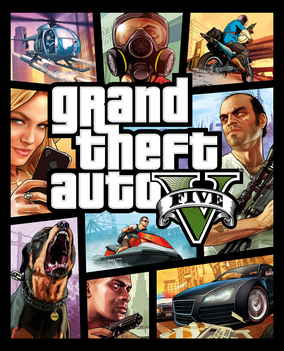
GTA5


Grand Theft Auto V: The Timeless Masterpiece of Open-World Gaming

GTA V Cover Art
Image Source: Rockstar Games

Released in 2013 by Rockstar Games, Grand Theft Auto V (GTA V) is a title that not only redefined open-world gaming but also set a benchmark for storytelling, graphics, and online multiplayer gameplay. Over a decade later, it remains one of the best-selling games of all time and a cultural icon in the gaming world. Whether you’re new to the game or a long-time fan, GTA V still offers a rich, immersive world worth diving into.


A Living, Breathing World: Welcome to Los Santos


The city of Los Santos is a fictional take on Los Angeles, meticulously crafted with stunning detail. From glitzy Vinewood to the rundown backstreets of South Los Santos, the map is huge, diverse, and always buzzing with life. The surrounding countryside, mountains, deserts, and oceans provide a playground for exploration, stunts, and unexpected discoveries.

What makes Los Santos feel alive isn’t just its scale—it’s the people. Pedestrians interact, animals roam the wild, and dynamic events pop up randomly, making every session unique.


Three Protagonists, One Epic Story

Unlike its predecessors, GTA V introduced three main characters:

  • Michael De Santa: A retired bank robber living in a luxurious yet dysfunctional household.

  • Franklin Clinton: A young hustler trying to escape the gang life and make a name for himself.

  • Trevor Philips: An unpredictable psychopath with a knack for violence and chaos.

The story unfolds through a seamless character-switching system, allowing players to see different perspectives of the same mission or event. The narrative is laced with humor, satire, and dark twists, tackling themes like corruption, family, greed, and the American Dream.


Heists: The Heart of the Campaign

One of the most memorable additions in GTA V is the heist system. These elaborate, multi-part missions allow players to plan and execute high-stakes robberies, choosing different approaches and crew members. From robbing banks to hijacking military convoys, each heist delivers adrenaline-pumping action and cinematic storytelling.

Players are often given choices: go stealth or go loud? Use a skilled hacker or save money with a rookie? These decisions affect outcomes, rewards, and even character arcs.


GTA Online: The Never-Ending Adventure

What truly extended GTA V’s lifespan is GTA Online—a constantly evolving multiplayer experience launched alongside the main game. Players create their own character and dive into a world of:

  • Heists with friends

  • Competitive races and death matches

  • Owning businesses, nightclubs, and even arcades

  • Flying cars, submarines, and Doomsday scenarios

GTA Online has grown into an MMO-like experience with seasonal updates, in-game events, and a thriving community.


Graphics and Sound: Ahead of Its Time

Even by today’s standards, GTA V looks and sounds phenomenal. The visual detail, especially in enhanced versions for PS5, Xbox Series X/S, and PC, includes:

  • 4K textures

  • Ray tracing

  • Improved lighting and animations

Pair that with a killer soundtrack, diverse radio stations, and top-notch voice acting, and you’ve got a world that feels alive in every sense.


Mods: Unlimited Possibilities on PC

The PC version of GTA V opened the doors to modding, allowing players to:

  • Play as superheroes

  • Add real-world vehicles

  • Change weather physics

  • Create custom missions or role play scenarios

One standout example is GTA RP (Role play) servers, where players take on roles (like police officers, criminals, EMTs) in a virtual society. These servers have launched careers for many streamers and content creators.


Cultural Impact and Legacy

GTA V has become more than just a game. It’s a cultural phenomenon, referenced in music, memes, YouTube parodies, and even academia. It’s a go-to example of open-world design and narrative excellence.

It also sparked discussions around violence in video games, satire in media, and online community building. Love it or hate it, you can’t ignore the influence GTA V has had on modern gaming.


Looking Ahead: The Wait for GTA VI

After years of speculation, Rock star has officially announced that GTA VI is in development, with a trailer released in December 2023. Set in Vice City, fans are excited to see what innovations await. But until then, GTA V continues to be the reigning king of open-world chaos.


Conclusion: A Game That Refuses to Fade

GTA V is not just a product of its time—it’s a testament to what great game design can achieve. With a gripping story, endless freedom, and a multiplayer world that keeps evolving, it remains a must-play for anyone who loves immersive gaming.

Whether you're jumping in for the first time or returning to cause some mayhem, there's always something new waiting in Los Santo

GTA4


Title: Revisiting Grand Theft Auto IV: A Gritty Masterpiece That Redefined Open-World Gaming

Released in April 2008, Rockstar Games’ Grand Theft Auto IV was more than just the next installment in a wildly popular franchise—it was a turning point. It stripped away the over-the-top glamour of its predecessors and introduced a more grounded, emotionally complex narrative, set in a brooding, reimagined New York City. Today, over 15 years later, GTA IV still holds a special place in gaming history.

The Story: A Tale of the American Dream Gone Wrong

At the heart of GTA IV is Niko Bellic, an Eastern European immigrant chasing the elusive American Dream. He arrives in Liberty City, lured by tales of wealth and luxury told by his cousin Roman. What he finds instead is a gritty city filled with corruption, crime, and disappointment. Roman’s life isn’t what he promised—he’s drowning in debt, surrounded by dangerous people, and clinging to false hope.

Niko, a war veteran with a traumatic past, gets pulled into Liberty City’s underworld. He starts off taking odd jobs, but his criminal activities escalate quickly. As the narrative unfolds, players witness Niko’s internal struggles—his need for redemption, his thirst for revenge, and his growing disillusionment with the so-called land of opportunity.

GTA IV’s story is darker and more mature than its predecessors. Rather than celebrating chaos, it reflects on the consequences of violence and the cost of survival in a world built on exploitation. It’s a story about broken dreams, human flaws, and moral ambiguity.

Liberty City: A Living, Breathing Urban Jungle

Rockstar’s recreation of New York City—dubbed Liberty City—is arguably one of the most immersive open-world environments ever created. From the crowded streets of Broker (Brooklyn) to the towering skyline of Algonquin (Manhattan), every borough is meticulously crafted with incredible attention to detail.

What makes Liberty City stand out is its authenticity. The people, the traffic, the ambient conversations—it all feels real. Unlike the sun-soaked, outrageous world of San Andreas, Liberty City is gray, rainy, and harsh. It’s a place where dreams die slowly, and Rockstar captured that mood perfectly.

Exploring the city is a joy in itself. From watching stand-up comedy at the comedy club to surfing in-game internet cafes and going on awkward dates, the game offers countless moments that feel unscripted and alive.

Gameplay: Refined, Realistic, and Ruthless

GTA IV introduced several gameplay mechanics that pushed the series into more grounded territory. The driving physics were more realistic—cars felt weighty, collisions had consequences, and high-speed chases required genuine skill. While some fans missed the arcade-style controls of previous entries, many appreciated the added challenge.

Combat also received a major overhaul. The cover system allowed for more tactical gunfights, and the shooting mechanics were tighter and more responsive. Melee combat was clunky, but serviceable.

One of the standout features was the cellphone. It wasn’t just a tool for receiving missions—it was central to the game’s social system. Players could call friends, arrange hangouts, go bowling, or even receive side missions. This mechanic helped humanize the characters, making Liberty City feel like more than just a sandbox—it felt like a place full of people you knew.

Characters: Complex, Flawed, and Unforgettable

Niko Bellic remains one of Rockstar’s most compelling protagonists. He’s introspective, haunted by his past, and yet capable of extreme violence. He’s neither a hero nor a villain—he’s a man doing what he must to survive in a city that constantly tests his morality.

Roman, Niko’s cousin, serves as both comic relief and emotional anchor. His optimism contrasts sharply with Niko’s cynicism. Other memorable characters include Brucie Kibbutz, a hyper-masculine maniac obsessed with steroids and fast cars, and Little Jacob, a loyal Rastafarian arms dealer with a heart of gold.

What sets GTA IV apart is how these characters aren’t just quest givers—they’re part of Niko’s life. The game allows players to build or damage relationships, adding emotional weight to the narrative.

Themes: Violence, Identity, and the Price of Freedom

GTA IV’s narrative is saturated with heavy themes. It explores the immigrant experience with surprising nuance, highlighting the alienation, struggle, and systemic inequalities faced by those chasing a better life.

It also critiques the American Dream. Through Niko’s eyes, we see how capitalism and ambition often lead to corruption and despair. Success in Liberty City doesn’t come from hard work—it comes from compromise, betrayal, and violence.

Perhaps the most poignant theme is identity. Niko constantly grapples with who he is versus who he wants to be. Can someone who has done terrible things ever truly change? The game doesn’t offer easy answers—it just asks you to reflect.

Legacy: The Forgotten Classic?

While GTA V eventually stole the spotlight with its flashy visuals and massive world, GTA IV deserves recognition for its artistic ambitions. It was the first GTA to take storytelling seriously, to dive deep into character psychology, and to present a world not as a playground, but as a mirror.

Critics praised the game for its mature tone and narrative depth, and while some fans missed the zany, over-the-top antics of earlier titles, many appreciated the shift in direction. It set the stage for future Rockstar titles like Red Dead Redemption and GTA V, both of which built upon GTA IV’s narrative innovations.

Even today, GTA IV holds up remarkably well. Mods and graphical overhauls have kept the game alive on PC, and the community still celebrates its impact. Its gritty realism, complex characters, and poignant storytelling continue to resonate with players old and new.

Final Thoughts

GTA IV may not be the most popular entry in the series, but it is arguably the most profound. It told a story that mattered, built a world that felt real, and redefined what an open-world game could be. For those willing to look past its dated visuals and technical limitations, Liberty City still has stories to tell—and lessons to teach.


Would you like me to format this for a blog site like WordPress or Medium?

GTA2


GTA 2: The Underappreciated Sequel That Laid the Foundation for a Gaming Empire

When people talk about the Grand Theft Auto franchise, the conversation usually revolves around groundbreaking titles like GTA III, San Andreas, or GTA V. But before the series went fully 3D and redefined open-world gaming, there was GTA 2—a quirky, chaotic, and surprisingly deep top-down game that quietly paved the way for the blockbusters to come. Released in 1999, GTA 2 is often overlooked, but it remains a fascinating piece of gaming history with its unique style, experimental gameplay, and dark humor.

Let’s take a look back at GTA 2, a game that blended retro chaos with early sandbox innovation and laid the groundwork for the future of the franchise.


A Glimpse Into a Fictional Future

GTA 2 took a curious leap into a near-future, cyberpunk-esque world. The setting wasn’t a real city like Liberty City or Los Santos, but rather a futuristic, unnamed urban landscape filled with towering buildings, neon signs, and an overwhelming sense of dystopian grit. The world felt grimy, lawless, and weird in all the right ways.

One of the most intriguing aspects of the game was its tone. GTA 2 didn’t try to replicate real-life cities or scenarios. Instead, it embraced absurdity. There were religious cults, robotic voices, and electric cars, all mashed together in a setting that felt both ahead of its time and strangely retro.


Respect the Gangs: A New Way to Play

What truly set GTA 2 apart from its predecessor—and even its successors—was the introduction of gang reputation mechanics. The city was divided among several criminal organizations, including the Yakuza, Zaibatsu Corporation, Loonies, Scientists, and others. Each had its own district, missions, and unique personality.

The catch? Working for one gang would earn you respect from them—but might make others hostile. For example, helping the Zaibatsu might make the Loonies open fire on you the next time you cross into their turf. This system forced players to think strategically. You couldn’t just take every job—you had to pick sides, weigh risks, and build a reputation.

This gang respect system was a surprisingly deep mechanic that added layers of complexity to the chaos. It gave players a reason to consider their choices, introducing consequences in a way the series hadn’t explored before.


Classic Top-Down Mayhem

GTA 2 stuck to the top-down perspective of the original game, and while the graphics were basic by today’s standards, they were a step up from the original GTA. The city had more detail, the lighting was more dynamic (especially with the day/night cycle), and everything felt more alive—even in 2D.

The gameplay was classic GTA: steal cars, cause chaos, complete missions, and evade the cops. But it was refined. Vehicle handling felt tighter, weapons were more varied, and the AI showed signs of actual behavior. Cops would chase you more aggressively, and pedestrians had more dynamic responses to your actions.

The missions were creative and ridiculous—exactly what fans came to love about the franchise. Whether it was stealing a tank, assassinating a gang boss, or delivering stolen organs to a shady doctor, the game never took itself too seriously.


A Soundtrack Full of Character

The soundtrack of GTA 2 was one of its most charming features. Instead of a single cohesive score, each gang had its own radio station, giving players a deeper sense of immersion. You’d be listening to psychedelic rock in Loonie territory, industrial beats in Zaibatsu land, or brainwashing religious chants when dealing with the Krishna group.

This attention to detail made the city feel more segmented and alive. Music wasn't just background noise—it helped tell the story of each gang's culture, adding flavor to every corner of the city.


GTA 2’s Real-World Promo Twist

One of the most unusual aspects of GTA 2's release was its live-action promotional film, which showed a stylized version of the game’s events, complete with car chases and shootouts. It was edgy, violent, and very “late '90s,” reflecting the tone of the game perfectly.

This promo video wasn’t just a gimmick—it was Rockstar’s early attempt to position GTA as a bold, boundary-pushing brand. The gritty, stylized realism hinted at what the series would eventually become.


Multiplayer Mayhem

Long before GTA Online was even a dream, GTA 2 offered multiplayer gameplay—though it was more of a LAN party experience than an online one. Players could battle it out on custom maps using the game's chaotic tools of destruction. While limited by the technology of the time, this mode laid the seeds for the franchise’s eventual online domination.


Legacy and Influence

While GTA 2 didn’t have the commercial success or cultural impact of later titles, it played a vital role in Rockstar’s evolution. It experimented with mechanics like gang reputation, mission branching, and dynamic environments—all ideas that would later be refined in 3D GTA games.

More than anything, it captured the spirit of chaos and freedom that defines Grand Theft Auto. It encouraged exploration, rewarded creativity, and never took itself too seriously.

Even today, revisiting GTA 2 is a reminder of how far the series has come—and how much of its DNA was present from the very start.


Final Thoughts

GTA 2 may not get the spotlight, but it deserves respect for being bold, weird, and ahead of its time. It took risks, introduced innovative mechanics, and created a world that was as wild as it was entertaining. For those who want to understand the roots of Rockstar’s empire, this game is a hidden gem worth rediscovering.

So if you’ve only played the 3D-era or modern GTA titles, do yourself a favor—go back, fire up GTA 2, and experience a chapter of gaming history that helped shape one of the most iconic franchises of all time.


Want this formatted for a blog platform or with custom images and headers?

GTA San Andreas


GTA San Andreas: A Timeless Classic That Redefined Open-World Gaming

When Rockstar Games released Grand Theft Auto: San Andreas in 2004, few could have predicted the massive impact it would have on the gaming industry. Even two decades later, San Andreas continues to hold a special place in the hearts of gamers worldwide. With its expansive open world, unforgettable characters, and genre-defining gameplay, it set a new benchmark for what video games could be. Let’s take a nostalgic journey back into the world of San Andreas and explore why it remains such a beloved title.

The Story of CJ and the Grove Street Family

At the core of GTA San Andreas is Carl “CJ” Johnson, a former gang member who returns to Los Santos after the death of his mother. The early parts of the game focus on CJ reconnecting with his old gang, the Grove Street Families, and working to restore their dominance in the streets. But as the game progresses, the story unfolds into a much larger narrative involving betrayal, political corruption, organized crime, and even covert government operations.

What made CJ so memorable wasn't just his story—it was his relatability. Unlike previous protagonists, CJ had clear motivations and emotional depth. Players watched him evolve from a street-level gangbanger into a powerful figure in the criminal underworld. His loyalty to his family and his struggle to do what's right in a world filled with moral gray areas added a layer of humanity that resonated with players.

A Massive and Diverse Open World

One of San Andreas's most revolutionary features was its map. Instead of one single city, the game offered an entire state to explore—San Andreas—modeled after California and Nevada. It included three major cities: Los Santos (based on Los Angeles), San Fierro (San Francisco), and Las Venturas (Las Vegas), along with rural countryside, mountains, deserts, and small towns in between.

Each region had its own unique vibe, culture, and challenges. From drive-by shootings in the gang-riddled streets of Los Santos to high-speed chases on the winding roads of Mount Chiliad, the variety kept players engaged. Even the transition between cities felt like a journey, with missions that gradually pulled you deeper into the heart of the state’s chaos.

This scale was unheard of at the time. The freedom to go virtually anywhere, whenever you wanted, turned San Andreas into more than a game—it became a sandbox of endless possibilities.

Unmatched Customization and RPG Elements

Another aspect that set San Andreas apart was the level of customization. For the first time in a GTA game, players could change CJ’s hairstyle, clothing, tattoos, and even his physique. Hit the gym regularly and CJ would bulk up, increasing his melee damage. Eat too many burgers without exercising, and he’d gain weight, affecting his stamina and speed.

These RPG-like mechanics extended beyond appearance. CJ could improve his driving, shooting, swimming, and cycling skills through repeated use. The sense of progression made players feel even more connected to the character. It wasn’t just about finishing missions—it was about building CJ into who you wanted him to be.

An Iconic Soundtrack

No discussion of San Andreas is complete without mentioning its legendary soundtrack. The in-game radio stations featured an eclectic mix of music from the early 1990s, spanning genres like hip-hop, rock, country, funk, and reggae. Artists like 2Pac, Dr. Dre, N.W.A., Rage Against the Machine, and James Brown brought the world to life in a way few other games had done.

Each station was curated with care and even included humorous and memorable radio hosts that added to the immersion. Whether you were cruising down the freeway at night or flying over the desert in a stolen jet, the music set the perfect tone for every moment.

Groundbreaking Features

San Andreas was packed with gameplay mechanics that pushed the limits of what games could do. Players could:

  • Swim (a first in the GTA series)

  • Fly planes and helicopters

  • Parachute off buildings

  • Drive trains

  • Customize cars at mod shops

  • Engage in gang wars to take over territory

  • Date various NPCs, each with unique personalities and preferences

The sheer variety of things to do meant that no two playthroughs were ever the same. Many players spent more time messing around in the world than actually progressing through the main storyline—and that was perfectly fine.

Cultural Impact

Beyond its gameplay, San Andreas became a cultural phenomenon. Lines like “Ah, sht, here we go again*” (now a legendary meme) are still quoted by gamers. The characters, particularly CJ, Big Smoke, Ryder, and Officer Tenpenny (voiced by Samuel L. Jackson), are etched into pop culture history.

Modding communities also kept the game alive long after its release, especially on PC. From graphics overhauls to total conversions, the game’s modding scene turned San Andreas into an evolving experience that still has a strong following today.

A Legacy That Lives On

Although later entries like GTA IV and GTA V improved upon the formula in many ways, San Andreas holds a special kind of charm that’s hard to replicate. It captured the spirit of an era—both in gaming and in the culture it mirrored. The remastered version released in 2021 as part of the GTA: The Trilogy – The Definitive Edition received mixed reviews due to technical issues, but the original remains a gold standard of game design.

For many, San Andreas was more than just a game—it was a rite of passage. It showed what video games could be: immersive, emotional, and endlessly entertaining.


Final Thoughts

Grand Theft Auto: San Andreas was a bold leap forward, not just for Rockstar, but for gaming as a whole. With its deep narrative, massive open world, unforgettable characters, and groundbreaking gameplay, it changed what we expected from video games forever. Whether you’re revisiting it for the nostalgia or experiencing it for the first time, San Andreas is a ride worth taking.


Would you like this blog formatted for a specific platform like WordPress or Medium? 

GTA;Vice city


Grand Theft Auto: Vice City – A Neon-Soaked Crime Epic

When Grand Theft Auto: Vice City hit shelves in 2002, it didn’t just follow up the revolutionary GTA III—it redefined what video games could be. Developed by Rockstar North, Vice City transported players to a vibrant, sun-soaked 1980s metropolis inspired by Miami, dripping with neon, synth-pop, and cocaine-fueled chaos. It wasn’t just a game; it was an interactive time machine into one of pop culture’s most iconic decades.

Welcome to Vice City

Set in 1986, Vice City follows the story of Tommy Vercetti, a former hitman for the Liberty City mob who’s released from prison after 15 years. Sent to Vice City to oversee a drug deal, Tommy quickly finds himself double-crossed and left with nothing. What follows is his ruthless climb to the top of the criminal underworld, building an empire of drugs, weapons, and power.

Unlike GTA III’s silent protagonist, Tommy Vercetti had a voice, a personality, and a deadly sense of ambition. Voiced by Ray Liotta (best known for Goodfellas), Tommy gave the game a cinematic edge, bringing depth and charisma to the story. This move helped elevate storytelling in open-world games and paved the way for Rockstar’s future narrative successes.

A Living, Breathing 80s World

Vice City wasn’t just a backdrop—it was a character in itself. From the pastel-colored art deco buildings to the palm tree-lined beaches and drug-fueled nightclubs, every detail screamed 1980s excess. Inspired by films like Scarface and TV shows like Miami Vice, the city was drenched in both glamour and grit.

Players could explore two major islands connected by bridges, each with its own neighborhoods, hidden secrets, and unique vibes. Whether you were cruising past Ocean Beach in a sports car, dodging gang shootouts in Little Haiti, or taking a helicopter over Downtown, Vice City felt alive and immersive.

And then there was the soundtrack.

Rockstar licensed over 90 tracks for the in-game radio stations, offering everything from Michael Jackson and Blondie to Slayer and Hall & Oates. Each station had its own DJ, commercials, and genre, making cruising the streets feel like flipping through an ‘80s mixtape. The soundtrack didn’t just set the mood—it was the mood.

Gameplay and Evolution

Vice City built upon the foundation of GTA III but expanded and refined nearly every aspect. The world was brighter and more colorful, and the gameplay more dynamic. For the first time in the series, players could ride motorcycles, pilot helicopters, and even purchase businesses.

These businesses weren’t just cosmetic—they served as a new way to generate income and unlock missions. You could buy an ice cream factory as a front for drug distribution, a strip club, or even a movie studio. Running these businesses involved completing unique tasks and missions, adding a layer of strategy to the chaos.

Combat was more refined as well. While still somewhat clunky by modern standards, the ability to shoot from vehicles and wield a larger variety of weapons (chainsaws, uzis, and sniper rifles included) made the action more engaging. The police system was also improved, with escalating wanted levels and more aggressive law enforcement tactics.

Missions ranged from the absurd (dressing as a mascot to sabotage a rival business) to the cinematic (storming a drug mansion in a clear Scarface homage). While not all missions were groundbreaking, they were consistently memorable thanks to clever writing, diverse objectives, and a cast of wild characters.

Vice City’s Impact

Upon release, GTA: Vice City became a cultural phenomenon. It sold millions of copies, won numerous Game of the Year awards, and was praised for its writing, music, world-building, and freedom. It proved that GTA III wasn’t a fluke—Rockstar had found a formula that combined mature storytelling, satirical edge, and gameplay freedom in a way few studios could match.

Critics lauded the game’s ambition, though some noted technical limitations, like clunky controls and occasional bugs. It also faced controversy for its violence and depiction of race and crime—criticism that has followed the series throughout its history.

But Vice City’s legacy isn’t just about sales or shock value—it’s about influence. The game set a new standard for open-world design. Its tone, aesthetic, and structure have inspired countless other games. It was among the first to blend licensed music, voice acting, and nonlinear gameplay into a seamless, living world.

Looking Back

Today, GTA: Vice City is remembered not only as a great GTA game but as one of the defining games of its generation. It combined style, substance, and satire in a way few games have matched. Even over 20 years later, its charm hasn’t faded. In fact, with recent remasters and a surge of nostalgia for all things retro, Vice City is enjoying a well-deserved second life.

Whether you played it on a PS2 in your bedroom with a CRT TV glowing or are experiencing it for the first time on modern hardware, Vice City remains a standout experience. It’s not just a game—it’s a trip back to a louder, flashier, more dangerous time.


GTA: Vice City didn’t just show us what video games could be in 2002—it showed us what they could feel like. And it felt like power, music, color, and chaos, all rolled into one neon-soaked masterpiece.


Let me know if you'd like a shorter or SEO-optimized version for web publishing!

GTA;Vice city stories


---


**Reliving the Glory of GTA: Vice City – A Retro Gaming Classic**


Released in 2002 by Rockstar Games, *Grand Theft Auto: Vice City* remains one of the most iconic open-world games in video game history. Set in a vibrant, neon-soaked rendition of 1980s Miami, Vice City combines fast-paced action, an unforgettable soundtrack, and a gripping storyline to create a timeless experience that still resonates with gamers more than two decades later.


### Welcome to Vice City


The game’s setting, Vice City, is a fictional city heavily inspired by Miami, Florida. From its palm-lined beaches and pastel-colored buildings to its Cuban, Haitian, and American cultural influences, Vice City captures the vibe of the 1980s in every detail. Players assume the role of Tommy Vercetti, a former mobster released from prison who quickly finds himself entangled in a web of betrayal, power struggles, and criminal ambition.


The narrative follows Tommy as he rises through the criminal underworld, starting from the bottom and building his empire by taking over businesses, establishing contacts, and eliminating enemies. What makes the story compelling is its cinematic presentation, borrowing inspiration from pop culture, especially the TV show *Miami Vice* and the film *Scarface*.


### Groundbreaking Gameplay


In 2002, the open-world format of Vice City was revolutionary. The game offered unprecedented freedom for players to explore the city, complete missions, or simply cause chaos. Whether it was stealing cars, flying helicopters, riding motorcycles, or engaging in street shootouts, the game never ran out of things to do. Vice City added a lot to the foundation laid by *GTA III*, including the ability to purchase properties and businesses that generate income.


The variety of missions kept the gameplay exciting. From bank heists and 

drug deals to high

GTA Liberty city stories


**GTA: Liberty City Stories – A Nostalgic Return to Chaos**


When Rockstar Games released *Grand Theft Auto: Liberty City Stories* in 2005 for the PlayStation Portable (and later on other platforms), it wasn’t just another addition to the GTA franchise — it was a trip back to one of the most iconic cities in gaming history. Set three years before the events of *GTA III*, Liberty City Stories gave fans a chance to revisit the gritty, crime-ridden streets of Liberty City, this time through the eyes of a different protagonist: Toni Cipriani.


### The Setting – A Familiar Yet Changed Liberty City


Liberty City Stories takes players back to the urban jungle first introduced in *GTA III*. But while the city map is familiar, the 1998 version of Liberty City is in a transitional phase. Construction sites that were finished in *GTA III* are still incomplete, and some neighborhoods have different characteristics. This not only gives long-time players a sense of nostalgia but also a fresh perspective on the city they thought they knew so well.


Rockstar cleverly uses these environmental differences to reflect the changing political and criminal landscape of the city. The different look and feel of Liberty City in *LCS* adds a layer of realism and timeline depth to the GTA universe.


### Toni Cipriani – From Underboss to Main Man


Players step into the shoes of Toni Cipriani, a loyal member of the Leone crime family who has just returned to Liberty City after laying low for a few years. His return is anything but smooth. Despite his loyalty, Toni is treated as a mere grunt, and the game’s story revolves around his efforts to re-earn his place and respect in the Leone hierarchy.


As the story unfolds, Toni deals with rival gangs, corrupt officials, family drama, and internal mafia politics. His character is less flamboyant than others in the GTA universe, but that works in favor of the game’s more grounded, mafia-style narrative.


### Gameplay – Classic GTA with PSP Flair


*Liberty City Stories* maintains the core mechanics of GTA: open-world exploration, mission-based progression, and chaotic side activities. What makes it stand out, especially for its time, is how well Rockstar managed to bring the GTA experience to the handheld PSP. The game was an ambitious attempt to deliver a full-fledged 3D GTA game on a portable device, and for the most part, it succeeded.


While the game lacks some features that would later become staples (like flying aircraft), it compensates with tight controls, a wide array of vehicles, and an impressive draw distance for a handheld title. The mission variety is solid, ranging from car chases and assassinations to escort missions and full-scale gang wars.


### Graphics and Sound – Impressive for Its Time


For a game released on a handheld in 2005, *Liberty City Stories* looked and sounded fantastic. The character models, textures, and cityscape pushed the limits of the PSP’s hardware. The city felt alive, with dynamic weather, day-night cycles, and random pedestrian behavior that added immersion.


The radio stations, always a hallmark of the GTA series, made a triumphant return. Featuring original music, satirical talk shows, and humorous ads, the in-game radio added personality to every car ride. Rockstar’s attention to audio detail gave the game its unique flavor and humor.


### Legacy and Impact


*Liberty City Stories* is often overshadowed by its bigger console siblings like *San Andreas* or *Vice City*, but it remains a pivotal title in the series. It proved that portable devices could deliver large, complex open-world experiences, setting the stage for later mobile ports and spin-offs.


Its success also led to the release of *Vice City Stories*, a prequel to *GTA: Vice City*, using a similar formula. These handheld entries helped expand the GTA lore and gave fans more content during the long waits between major releases.


Over time, *Liberty City Stories* was ported to PlayStation 2, iOS, and Android, ensuring its place in the gaming history books and keeping it accessible to newer generations of players.


### Conclusion – A Hidden Gem in the GTA Universe


*Grand Theft Auto: Liberty City Stories* may not have the scale of *San Andreas* or the innovation of *GTA IV*, but it delivers a tight, engaging, and nostalgic experience. Its return to Liberty City, compelling mafia-driven story, and portable gameplay innovations make it a standout title in the franchise.


For fans of GTA who want to see the roots of Liberty City before Claude’s silent rampage in *GTA III*, or for those who appreciate a good mob story wrapped in chaos, *Liberty City Stories* is a must-play. It’s more than just a side story — it’s a cornerstone of the GTA timeline, wrapped in bullets, betrayal, and vintage Rockstar attitude.


GTA china town wars


**GTA: Chinatown Wars – A Bold, Stylized Twist on the Franchise**


When Rockstar Games released *Grand Theft Auto: Chinatown Wars* in 2009, it marked one of the boldest moves in the franchise’s history. Designed initially for the Nintendo DS, and later released for the PSP, iOS, and Android, *Chinatown Wars* took a sharp turn from the high-definition realism of its console siblings. Instead, it embraced a cel-shaded, top-down perspective, brought back old-school mechanics, and introduced new features never seen before in the series — all while delivering a compelling, action-packed crime story.


### A Different Look, A Familiar Feel


The most immediate difference in *Chinatown Wars* is its visual style. The game features cel-shaded graphics with a top-down isometric camera view, reminiscent of the earliest GTA titles. This stylistic decision wasn’t just about nostalgia — it was also a smart way to work around hardware limitations of the Nintendo DS while maintaining clarity and visual personality.


Despite the change in perspective, *Chinatown Wars* still feels like a full-fledged GTA experience. Liberty City returns once again, this time with a layout closely resembling *GTA IV*’s version of the city, albeit reimagined to fit the new art style and gameplay format. It’s packed with detail, from pedestrian behaviors to bustling traffic, dynamic weather, and plenty of hidden secrets.


### The Story – Revenge, Honor, and Crime


You play as Huang Lee, the spoiled son of a recently-assassinated Triad boss. Sent to Liberty City to deliver an ancient family sword to his uncle Kenny, Huang is quickly ambushed, robbed, and left for dead. From there, the story spirals into a complex web of gang rivalries, police corruption, family betrayal, and vengeance.


The narrative is laced with humor, satirical dialogue, and surprising depth. Huang himself is an interesting character — sarcastic, arrogant, but slowly hardened by the brutal criminal underworld. The game does a solid job of blending traditional GTA-style crime storytelling with the unique culture of the Triads and the Chinese-American underworld.


### Innovative Gameplay Mechanics


What truly sets *Chinatown Wars* apart are its unique gameplay mechanics. Rockstar took full advantage of the DS’s touch screen, integrating mini-games for everything from hotwiring cars and assembling sniper rifles to mixing drugs and hacking computers. These interactions made missions more dynamic and gave players an immersive sense of involvement.


One of the game’s most talked-about features was its **drug dealing mini-game**. Huang can buy and sell drugs like heroin, cocaine, marijuana, and ecstasy across different boroughs of Liberty City. Prices fluctuate, police crackdowns change the market, and rival dealers pose risks — turning this side hustle into a surprisingly strategic and lucrative gameplay loop.


Police evasion was also reworked. Instead of simply outrunning a “wanted” circle, players had to actively destroy police cars to reduce their wanted level, giving chases a more aggressive and tactical edge.


### Mission Design and Replayability


*Chinatown Wars* excels in mission variety. Whether it’s stealing high-end vehicles, carrying out assassinations, tailing enemies, or helping your uncle manage the Triad empire, the game keeps things fresh and fast-paced. Missions are often short and punchy — perfect for handheld play — but challenging enough to require strategic thinking.


Beyond the main story, there’s a ton of side content: rampages, races, delivery jobs, and hidden collectibles. The Liberty City map is rich with things to do, encouraging exploration even within its compact design.


### Sound and Atmosphere


Due to storage limitations, *Chinatown Wars* doesn’t feature traditional GTA radio stations with licensed music and talk shows. Instead, it includes instrumental electronic music tracks that suit the fast-paced gameplay. On platforms like PSP and mobile, however, Rockstar added more radio-style content to enhance immersion.


What the game may lack in voice acting or full-length audio production, it makes up for in atmosphere. The stylized cutscenes, comic book-inspired transitions, and sharp writing give the game its own distinct tone — gritty yet playful.


### Legacy and Critical Acclaim


*Chinatown Wars* received widespread critical acclaim for its innovation, humor, and gameplay depth. It holds high scores across review platforms and is often praised as one of the most underrated entries in the GTA series.


Despite its acclaim, the game struggled with sales early on, especially on the Nintendo DS. Rockstar took a creative risk launching such a mature title on a platform often associated with younger audiences. However, later ports to PSP, iOS, and Android helped expand its reach and appreciation.


Many fans view *Chinatown Wars* as a cult classic — a reminder of Rockstar’s willingness to experiment and innovate within a beloved franchise. It proved that GTA could work on handhelds without compromising depth, storytelling, or chaos.


### Conclusion – A Compact Masterpiece


*Grand Theft Auto: Chinatown Wars* is more than a side project — it’s a compact masterpiece. Bold in its design, innovative in its mechanics, and faithful to the chaotic heart of GTA, it stands as one of the most creative entries in the series.


Whether you’re a long-time fan of the franchise or a newcomer looking for a portable crime saga, *Chinatown Wars* is absolutely worth your time. It may not have the HD polish of its bigger siblings, but it delivers something just as valuable — pure, unfiltered, open-world fun with a unique cultural twist.